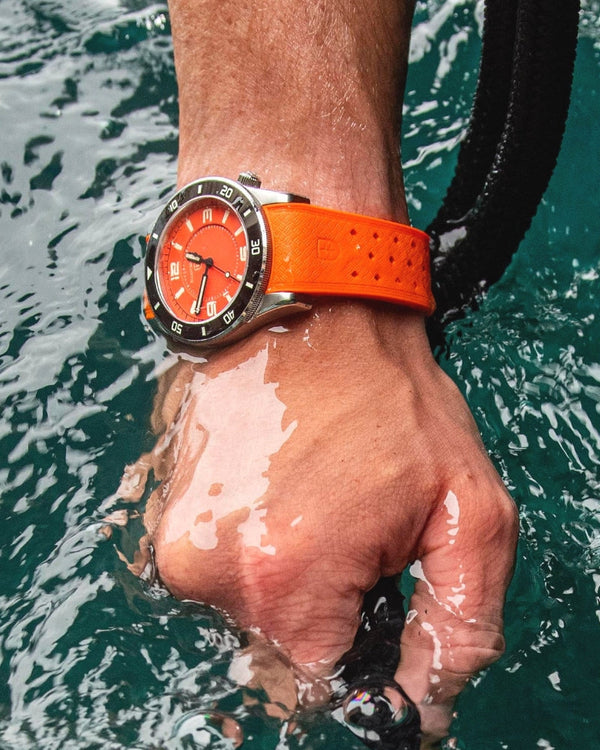
The thought process behind this is simple and honest: if we test every single watch, in water at 200m or 300m, then we’ll know absolutely that the watch on your wrist will cope with more than you can.
When we are working to eradicate typical points of weakness in our watches, it is the confidence from our engineering and testing that gives us the reliable surety we require. Only then do we feel comfortable calling ourselves a go-anywhere, do-anything tool watch business.
If we were into decorative haut horology timepieces we might not be so stringent because those watches aren’t expected to perform in harsh environments – a shower is about the limit in many cases, but as the tool watch brand of choice for many military and blue light organisations around the world, our watches have to more than live up to the hype.
It’s expensive. Putting every watch twice into an air pressure test chamber, then into water inside a giant pressure vessel that pressurises them to great depths (sorry we don’t have a diver that dives with every watch). It takes time, but it’s worth it, and offers a level of transparency that’s above and beyond when compared to just about any other watch at any price. Just how we like it.
In our world there are three types of testing: laboratory testing, field testing and extreme testing.
Lab testing is controllable, measurable, definitive. Here are a few highlights of what we put our watches through.
Shock testing is carried out on a percentage of every production batch, dropping a watch 1m onto a hardwood surface. That’s the ISO 1413 shock test, it’s fairly lame in our world but it has a purpose as an initial phase.
Our next and much more extreme shock test is with a 3kg pendulum mallet, much like a croquet mallet. Ours is steel with a PTFE face. We place a watch the right way up on a small plinth on the floor, lift the mallet just beyond horizontal then release.
The force it applies as it smashes into the side of the watch case is circa 5000g, and the watch pings off the face of the mallet much like a golf ball being hit by a golf club. There’s a catch net to make sure the watch doesn’t dent the wall. It’s a big hit but we can do that because the movement shock protection system inside is so effective.
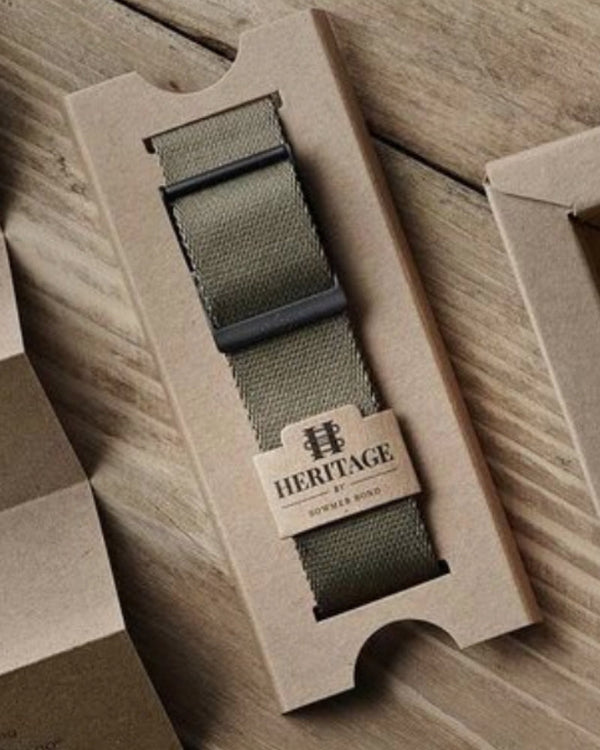
We twist, bend and abrase straps, 1000s of times so we can stand behind our fair wear and tear strap policy.
17mm ball bearings are dropped onto the crystals, 3 times from a height of just under a metre to make sure every batch will perform as intended. You wouldn’t want to put a finger or toe under them!

We create the watches we always wanted to wear. They are the watches we craved but could never find, with real world performance baked-in thanks to our unique DNA.
Field testing is real, it’s public, there’s no hiding.
Customers and ambassadors are out there every day putting their watches through situations most of us would rather not think about.
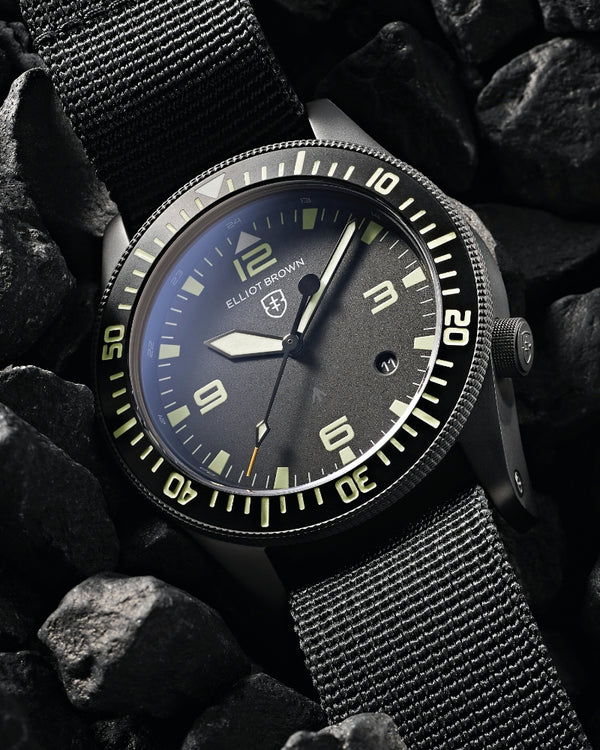
Before the Holton was issued to special forces it underwent two years of the most arduous field testing through searing deserts, tropical rain forests, high altitude and freezing sub-sea conditions, day in, day out. Everyone was impressed.
Many years later, those same watches are still performing, still being tested daily in extremes and that has to be the toughest real world field test of them all.
We strap watches onto the wrists of ambassadors and people who deliberately put themselves into harm's way to overcome extraordinary challenges. Rowing oceans, taking on the highest peaks, free falling from heights so high oxygen is required, or diving for prolonged periods.
Their watches are generally on their wrists so they have the comfort and warmth of the wearer.
Extreme testing can take many forms, it can also be very public and if we ever show a clip of such a test, there will be no editing of the footage to replace a broken watch with a new one.
In the Crew Room in our Poole HQ, there’s an antique glass cabinet housing many of the watches that have survived (and failed), exactly as they came from the test, muddy, sooty, salty.
Most of these tests aren’t carried out with the comfort of a human wrist, so the forces and extremes can be 1000s of times greater. They prove beyond any doubt that our watches are the most rugged. They are also a bit of fun but with a serious message that’s a testament to our philosophy of first building watches like no other, then testing beyond any kind of normal conditions.
We learn from every test which means you can be assured of complete reliability when the chips are down, and when they aren’t.

We strapped a standard Holton 101-001 to an under water remote operated vehicle to see how deep it would get before something failed. The answer? 1921m still ticking. Incredible.

When the invite came to visit a specialist demolitions quarry we were there in a flash. One watch survived being blown up three times, including 500g of explosive charge directly under the watch. But rather than searching for parts, it survived, still working.

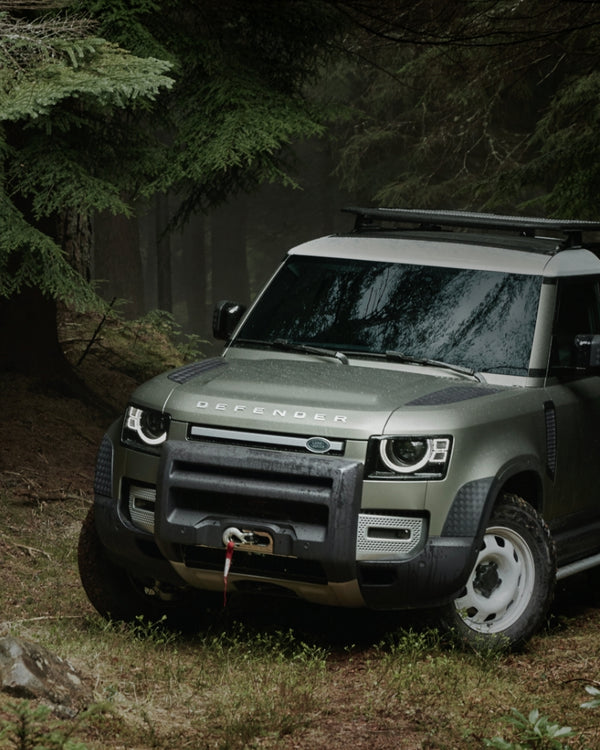
Filming for the release of our first Land Rover collab watch, the film required the Defender to accelerate hard through a rocky puddle in which there was a Land Rover x Elliot Brown Holton. 15 times the stunt driver smashed over the watch almost spitting it out from under the hard accelerating tyre. Did it survive? Hardly a scratch.

We fixed a watch on a bracket to the bow of a yacht in the Clipper Round The World Yacht Race. Hitting everything mother nature and human debris could throw at it for a year and 50,000 miles at sea. It returned ticking just fine.